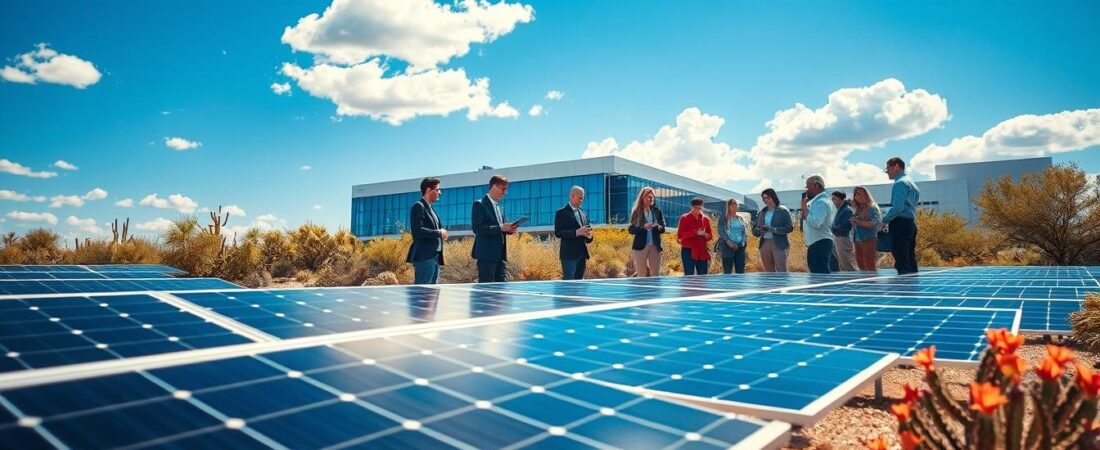
Thinking about clean energy for your home? This guide gives a clear, friendly start. Homeowners across the state can save over $34,982 on energy bills after their system pays for itself.
There are more than 170 local providers to consider, so choosing a reputable installer matters. We break down how to compare service history, reputation, and long-term value.
Why read on? Rising utility costs and abundant sunshine make photovoltaic systems a practical option for many households. This introduction previews vetted options and what to look for when you decide.
By the end, you’ll understand key benefits, realistic savings, and how to pick a reliable partner for your project. Short, practical advice helps you move from research to confident action.
Why Arizona is the Ideal State for Solar Energy
Consistent, strong sunlight makes this state a top choice for homeowners who want reliable home power generation.
Most areas receive between 7 and 8 peak sun hours every day. That high irradiance means a smaller system can produce more output than it would elsewhere.
Cities like Phoenix have logged over 300 sunny days in some years. That abundance helps reduce reliance on the grid and improves year-round returns.
“High daily sun hours let homeowners maximize production and lower monthly electric bills.”
Practical benefit: homeowners often need fewer panels for the same annual energy yield, and systems reach payback sooner.
- Higher output: more usable electricity per panel.
- Smaller footprint: reduced roof space and lower upfront costs.
- Predictable savings: steady sun leads to steady long-term value.
Top Solar Panel Companies in Arizona
Technology leaders and service-first teams both earn spots on our short list.
How we chose leaders: We weighed product quality, long-term service, and local reputation. That approach highlights firms that deliver reliable equipment and strong follow-up care.
Top Rated Technology Providers
Tesla Solar earns praise for advanced inverters and system integration. Their products aim for high efficiency and streamlined monitoring.
Best Customer Service Specialists
Solar Optimum and Elevation Solar stand out for attentive support, fast responses, and thorough site work. They often help with complex installs and warranty follow-up.
Local options like Sun Valley Solar Solutions provide trusted installation, while Verde Solar Power is a budget-friendly choice for many homeowners seeking value.
| Company | Strength | Typical Offerings | Years Local |
|---|---|---|---|
| Tesla Solar | Technology | High-efficiency equipment, monitoring | 10+ |
| Solar Optimum | Customer service | Complex installs, warranty support | 8 |
| Sun Valley Solar Solutions | Installer reputation | Local installs, system design | 12 |
| Verde Solar Power | Budget option | Cost-conscious systems, basic monitoring | 9 |
How We Evaluated the Best Solar Installers
Evaluation started with a clear scoring model that weights reputation, pricing, services, and warranty coverage. We assigned a 20% weighting to local reputation and cost transparency to reflect homeowner priorities.
We studied how installers handle customer interactions. That includes lead response time, clarity of contracts, and follow-up care.
Technical skill mattered too. Each installer was checked for system design ability, permitting know-how, and a track record of timely installs.
- Custom solutions: We looked for teams that tailor systems to household needs, roof layout, and usage patterns.
- Warranty & service: Long-term support and clear warranty terms scored highly.
- Feedback review: We cross-referenced reviews, public records, and direct customer interviews for accuracy.
“Our goal was to recommend installers who deliver dependable results and clear communication.”
Understanding the Cost of Solar Installation
Knowing how much a system costs per watt helps you spot a fair installer quote. Start by looking at the per-watt range for your region to set realistic expectations.
Average Price Per Watt
The typical average price ranges from $2.11 to $3.17 per watt. That range gives homeowners a clear benchmark when comparing bids.
After the federal tax credit, a 5 kW to 10 kW system usually costs about $9,135 to $18,270. Those figures include basic equipment and standard installation.
- Why per watt matters: It helps compare quotes regardless of system size.
- Expect higher prices for premium equipment or tricky roofs.
- High-efficiency solar panels can raise upfront cost but improve energy output over time.
“Review the total price per watt and the quality of equipment to ensure a competitive, long-lasting investment.”
| Metric | Typical Range | Notes |
|---|---|---|
| Average price per watt | $2.11 – $3.17 | Good baseline for comparing quotes |
| 5–10 kW system cost (after credit) | $9,135 – $18,270 | Depends on equipment and roof complexity |
| Premium equipment uplift | +$0.20 – $0.80 per watt | Higher efficiency and longer warranties |
Navigating Arizona Solar Incentives and Tax Credits
Smart use of tax credits and billing rules can shorten the payback time for a home system. These programs lower upfront cost and improve long-term value.
Federal Solar Tax Credit
The federal tax credit lets you deduct 30% of eligible system costs from your federal taxes for purchases made before Dec. 31, 2032.
State Tax Exemptions
Arizona offers a state credit worth 25% for residential systems, with a maximum $1,000 personal income tax reduction.
Also: many properties get a property tax exemption for the added value of the installation.
Net Billing Policies
Net billing allows utilities to buy excess power from homeowners, but payout rates vary by utility and are often lower than older net metering rules.
- Tip: Combine federal and state programs to reduce your upfront cost.
- Check local utility rules to estimate export rates and payback time.
| Incentive | Benefit | Notes |
|---|---|---|
| Federal tax credit | 30% cost reduction | Valid for purchases before 12/31/2032 |
| State tax credit | 25% up to $1,000 | Residential systems only |
| Property tax exemption | Save on increased assessed value | Reduces local property tax impact |
“Research incentives and local billing to maximize savings and shorten payback.”
The Importance of Choosing a Reputable Solar Company
Picking the right installer protects your investment for decades. A reputable solar company will offer clear warranties and steady service over the life of your system.
Look for at least five years of local experience. Firms with that track record usually handle warranty claims and follow-up work reliably.
- Licensing & insurance: Protects workers and your home during installation.
- Financial stability: Ensures long-term warranty support and parts access.
- Customer service: Read reviews and check response times before you sign.
Many solar companies may advertise low rates, but transparency matters more. The best solar companies focus on tailored proposals and won’t push unnecessary products.
“Choose a partner who will be there for 25 years and who stands behind workmanship and product warranties.”
| What to Check | Why it Matters | Quick Action |
|---|---|---|
| Years operating | Shows proven track record | Verify business history, ask for references |
| Licenses & insurance | Safety and liability protection | Request copies before work starts |
| Warranty terms | Long-term value and repairs | Compare workmanship and product length |
For guidance on how to vet providers, choose a reputable installer before moving forward.
Key Factors to Consider Before Signing a Contract
Prioritize proof of long-term service and proper licensing before committing to an installer. A short check now avoids big headaches later.
Years in Business
Look for firms with a stable history. A reputable solar company that has operated for five or more years usually offers reliable after-sale service and clearer warranty support.
Experienced teams know how to size systems, handle permits, and troubleshoot equipment. That makes installations smoother and helps protect your investment in products and workmanship.
Licensing and Insurance
All PV installers must hold the proper contractor and electrician licenses to work legally. Make sure the installer shows current licenses and proof of insurance before you sign.
- Verify credentials: Ask for copies of licenses and certifications like NABCEP.
- Check warranty terms: Confirm both product and workmanship warranty details in writing.
- Confirm coverage: Insurance protects your home during installation and covers on-site risks.
“Before signing, make sure the company has the licenses, insurance, and multi-year experience to back up its promises.”
Comparing Solar Financing Options
Financing choices shape how fast your system pays for itself and how much you pay each month.
Loans, leases, and power purchase agreements change total cost and cash flow. Loans often include dealer fees that can add 20% or more to the system price. That fee may offset lower interest rates, so compare totals, not just monthly payments.
If you pick a lease or PPA, watch for an escalator clause. Many agreements raise payments roughly 3% per year. That can outpace local utility rate changes and reduce expected savings.
- Ask for both cash and financed quotes so you see dealer fees and true cost.
- Many local companies offer loans, leases, and PPAs to match household budgets.
- If you choose a lease, review the escalator clause and long-term terms carefully.
- A good company will clearly explain all options and trade-offs.
“Compare financing paths to find the most cost-effective funding without sacrificing equipment quality.”
| Option | Main benefit | Key risk |
|---|---|---|
| Cash | Lowest total cost, fastest payback | High upfront expense |
| Loan | Own the system, predictable payments | Dealer fees can add 20%+ to cost |
| Lease / PPA | Low to no upfront cost | Escalator clauses (~3%/yr) reduce savings |
Why Professional Installation Beats DIY Methods
A trained installer follows local codes and prevents costly damage down the road. Professional work reduces the chance of structural or electrical problems and keeps your home safe.
Electrical and General Safety
Proper wiring matters. Incorrect connections can cause fires, shock hazards, or damage to the entire system. Licensed electricians know how to size breakers, route wiring, and meet code requirements.
Warranty and performance depend on quality work. Many manufacturers require certified installation to keep product warranties valid. A DIY approach can lead to denied claims if a fault traces back to amateur installation.
Efficiency is affected by installation quality. Precise mounting, tilt, and electrical hookup help the system produce the most energy possible. That means better long-term savings and fewer service calls.
- Safety first: Professionals follow building and electrical codes to minimize risks.
- Warranty protection: Certified installers preserve manufacturer coverage.
- Optimal output: Quality installation improves system performance.
- Peace of mind: Licensed crews handle permits and inspections for you.
“Let licensed professionals handle the installation to protect your home, your warranty, and your long-term energy returns.”
For guidance on choosing experienced installers and to learn more about our team, visit our about page.
Assessing Equipment Quality and Efficiency
Equipment quality shapes long-term performance and should be a top priority before you sign. Good gear delivers steady energy and fewer service calls over the life of your system.
Most modern solar panels are roughly 400 watts and often exceed 19% efficiency. That means higher output per roof area and better performance on cloudy days.
- Look for long warranties: reputable companies typically offer 25-year product and performance coverage to protect your investment for years.
- Ask about brands and models: confirm which equipment and products your installer will supply and why they recommend them.
- Weigh wattage vs. cost: high-watt modules can cost more but often save roof space and improve value over time.
- Professional installation matters: a trained crew matches equipment to your roof, maximizes energy, and minimizes call-backs.
For a vetted check of an existing system, consider a system evaluation to verify equipment health and expected output.
“Choose proven products and trusted installers to keep your installation productive for decades.”
How to Read and Compare Solar Quotes
Start by asking each installer for a line-item quote that lists system size, projected annual production, and the total cost. A clear breakdown helps you compare price per watt and expected output without guessing.
Get at least three quotes from different installers to spot outliers and confirm market pricing. A reputable company will include equipment brands, labor, and exact warranty terms so you know what is covered and for how many years.
- Compare system size and yearly energy estimates to ensure each bid meets your needs.
- Check that equipment and product models are listed; this lets you judge quality and service history.
- Watch the price-per-watt and total cost — an unusually low bid may skip needed work.
- Ask any installer to explain big differences; shading, roof complexity, or inverter choice often matter.
- Choose the quote that balances price, clear warranty terms, and strong customer service.
“Careful reading of quotes helps you find the best partner and avoid surprises.”
The Role of Solar Batteries in Arizona
Energy storage turns variable daytime generation into a steady, usable reserve. A solar battery stores excess output for use after sunset. That lets your home rely less on the grid and keeps critical circuits running during outages.
When net billing pays less for exports, a battery helps you capture full value from your solar panels. Storing daytime production can cut peak demand and lower your monthly electric bills. It also gives you greater control over when you use generated energy.
- Store excess power: add a solar battery to your home system to save midday output for night use.
- Maximize value: batteries offset low export rates from net billing and boost self-consumption from panels.
- Backup power: reliable reserve during outages keeps essentials running.
- Lower bills: stored energy reduces grid draws at high-cost hours.
“A well-sized battery turns intermittent production into dependable home power.”
Tip: pair a quality battery with a properly sized system to get the best long-term return and consistent clean energy at home.
Impact of Solar on Home Property Value
Adding a home energy system can make your property stand out to buyers and appraisers. In our state, homes with solar panels typically show about a 4.1% rise in value. That equals roughly a $17,030 average increase for a residence with a well-installed system.
Why this matters: many buyers view rooftop panels as a built-in lower bill and a move toward efficiency. That perceived benefit often speeds sales and supports higher offers.
- Proven equity boost: installing solar panels often recoups a large share of initial cost through increased home value.
- Buyer appeal: a maintained system signals energy savings and modern upgrades.
- Long-term wealth: lower monthly bills plus higher resale price add up to strong ROI.
“A quality system not only trims utility costs but also raises a home’s market value.”
What to Expect During the Installation Process
A typical home installation usually finishes within one to three days, depending on roof complexity and the size of your system.
Before crews arrive, your chosen installer handles permits and paperwork so the on-site work goes smoothly. Crews will prepare the roof, mount racking, run wiring, and set up inverters.
Electrical and General Safety
Safety comes first. Licensed electricians size breakers, route wiring, and tie the new system into your home safely.
- During the solar panel installation, the team mounts modules and secures electrical connections.
- The installation is managed end-to-end by your company, including permits and documentation.
- After physical work finishes, a local inspector reviews the project and approves interconnection.
- A professional installer will walk you through activation and basic operation steps.
Good coordination prevents delays and helps the system begin producing power as expected. Expect clear communication and a brief final inspection before full activation.
“Proper inspections and licensed crews protect your home and long-term performance.”
Conclusion
Smart decisions now protect your investment and improve returns over decades. Choose a system that matches your household needs and look for strong service and clear warranty terms. A reliable installer and quality equipment help your home save energy and increase value.
When comparing the best solar companies, weigh customer service, years of local experience, and transparent pricing. Ask each company for a line-item quote and check references so you see how they handle installation and follow-up.
Going solar in arizona is a sensible financial move when you pick the right partner. Compare multiple quotes, confirm reputation, and choose an installer who stands behind products and workmanship for years.