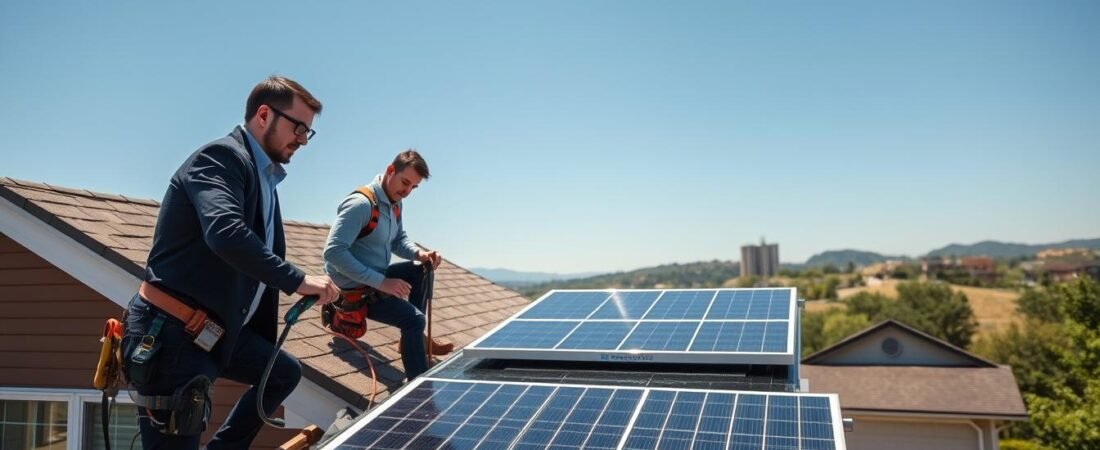
Thinking about moving off the grid? Homeowners in the Triangle now see real value in rooftop energy. With up to $59,000 in potential savings over 25 years, this choice can cut utility bills and add long-term value.
Raleigh averages 5.1 peak sun hours per day and more than 213 sunny days yearly, making it a smart market for local systems. Choosing the right company is the first step toward reliable energy and less dependence on traditional power.
Our guide walks you from initial quotes to final inspection and shows how vetted solar companies work in North Carolina. We highlight what to ask, what to expect, and how to compare offers.
Key takeaways: Big lifetime savings, strong local sun resources, and vetted local teams make switching a practical option for many homeowners.
The State of Solar Energy in Raleigh
Rising utility costs have pushed many Triangle homeowners to rethink where their electricity comes from. North Carolina electricity prices climbed about 25% since 2021, and the average rate now sits near 14.1¢ per kWh. That trend makes clean energy systems more attractive for long-term savings.
The area gets roughly 5.1 peak sun hours per day and over 213 sunny days a year. Those conditions help each solar panels system produce more power and lower monthly bills for the typical homeowner.
Many find a system pays for itself within a few years as utility costs rise. Generating your own electricity also shields a home from volatile rates and gives predictable savings over the years.
To learn about state support and funding options for local projects, review this resource on incentives and programs: state solar incentives.
Understanding Solar Panel Installation Raleigh NC Costs
Estimating the true cost starts with the size of the system your household needs. A typical 8.19 kW solar panel system in Raleigh costs about $22,970 before incentives. The average price per watt in north carolina runs near $2.80.
System Size Considerations
Small homes under 2,000 sq ft generally need fewer modules to meet demand. Larger roofs or high electricity use push size and price up. Proper sizing can offset nearly 100% of your average electricity use over 25 years, giving predictable savings.
Factors Influencing Total Price
High-efficiency panels raise upfront costs but often deliver better long-term energy savings. Each company provides a custom estimate based on roof orientation and annual usage data. Federal and state tax credit programs can significantly lower the final cost.
- Price per watt: ~ $2.80 in north carolina.
- Typical estimate: 8.19 kW ≈ $22,970 before incentives.
- Tip: Compare multiple estimates from reputable solar companies to find the best price and warranty.
Financial Benefits of Going Solar
Locking in predictable electricity costs is a major win for homeowners who choose a rooftop energy system. A properly sized system protects your monthly budget as grid prices climb.
Leasing options let you eliminate the upfront cost and start saving money on day one. Many owners see lower bills immediately while avoiding large outlays.
Over 25 years, a well-designed setup can generate thousands in net benefits. Federal tax credit programs and local incentives further reduce the net price and improve returns.
Compound savings matter: each rise in utility rates increases the relative value of your energy production. That means the initial cost often pays back faster than expected.
- Short-term: immediate electricity bill relief with leasing or loans.
- Long-term: steady money saved across years and higher resale value for your home.
Navigating Local Solar Incentives and Rebates
Homeowners often miss simple programs that cut upfront cost and speed payback for clean energy systems. Start by mapping available rebates and tax credits before you request quotes.
Duke Energy Programs
Duke Energy offers several ways to lower net cost. The PowerPair rebate pays up to $9,000 for customers who add a battery to their system.
The EnergyWise Home battery program can earn homeowners up to $92 per month in bill credits when batteries help manage peak electricity demand.
Net Metering Policies
The Net Metering Bridge rider (NMB) lets owners earn credits for excess energy sent back to the grid.
Those credits reduce monthly bills and improve long-term returns on your system.
State Tax Credits and Grants
North Carolina supports projects with a 35% state income tax credit for commercial renewable property.
Low-to-moderate income households can apply for EnergizeNC grants, a $156 million program that expands access to clean energy.
- Tip: combine utility rebates, state tax credits, and federal tax credit to cut upfront cost.
- Check DEQ data to confirm program availability and track local projects.
The Step by Step Installation Process
A typical rooftop project moves quickly once permits are in hand, often finishing in just a few days.
The process begins with a site visit from your chosen solar company. Technicians inspect roof condition, orientation, and your electrical panel to design a safe, efficient layout.
After permits are secured, crews mount racking and attach the panels. Most active on‑site work takes one to three days, depending on roof complexity and the size of the system.
Once the panels are in place, a town inspector checks electrical and structural safety. Your installer then files final paperwork for interconnection.
“Proper installation ensures your system operates at peak efficiency for 25 years or more.”
When the utility grants final approval, your home can begin using clean energy. A good company handles permits and inspections to keep the project on schedule and reduce delays.
- Step 1: Site visit and design.
- Step 2: Permits and paperwork handled by your installer.
- Step 3: Mounting, inspection, and interconnection approval.
Evaluating Top Solar Companies in the Triangle
Choosing the right local company makes the difference between a smooth project and months of delays.
Start with credentials: look for firms with clear licensing, insurance, and a track record handling local permitting.
Key Criteria for Selecting an Installer
Customer reviews matter. Our analysis of over 1,500 firms shows that ratings are a top indicator of consistent service and timely support.
- Warranties: prefer companies offering 25-year product and workmanship coverage.
- Local leaders: NC Solar Now, Southern Energy Management, and 8MSolar rank among the best solar companies in the area.
- Services: top-tier providers add battery storage, energy-efficiency audits, and system monitoring.
- Transparency: free quotes help homeowners compare total cost, incentives, and projected power output.
“Pick a company that knows local codes and offers strong, long-term warranties.”
Comparing reviews, price, and available solar solutions will help you choose a reliable solar company and protect your investment for years to come.
Comparing Solar Leasing Versus Ownership
Financial goals and how long you plan to stay in your home often drive the buy-versus-lease decision.
Leasing can let you go green with little to no upfront cost. For example, Palmetto’s LightReach lease advertises payments starting near $95/month. With a lease, the company owns the gear and handles maintenance and repairs.
Ownership gives you control. Buying a system lets you claim federal tax incentives and build home equity. You also choose warranties, monitoring, and future upgrades.
| Option | Upfront Cost | Maintenance | Incentives | Best For |
|---|---|---|---|---|
| Lease (LightReach) | Low to none | Handled by provider | Provider claims tax credits | Short-term residents; low hassle |
| Buy (Own) | Higher upfront or financed | Homeowner or warranty | Owner claims federal credits | Long-term stay; maximize savings |
| Financing | Moderate (loans) | Owner responsibility, may include service | Owner may claim credits | Want ownership without full cash |
Many solar companies now offer flexible loans and leases. Talk to more than one provider to compare monthly costs, total savings, and contract terms.
“Choose the path that matches your finances and how long you will live in the home.”
Environmental Impact and Sustainability
A typical 10 kW system can cut nearly 10 tons of CO2 from a home’s annual footprint. That reduction equals planting about 175 trees each year.
Generating clean energy on your roof lowers your home’s carbon footprint and shrinks reliance on grid electricity. The energy payback period for modern equipment is short—often just 1 to 4 years of operation.
Many solar companies now follow sustainable practices. They offer responsible recycling for end-of-life modules and promote long warranties to extend product life.
Lower grid use helps the entire region. When homeowners produce their own electricity, demand on fossil-fuel plants falls and local air quality improves.
| Metric | Annual Impact | Benefit |
|---|---|---|
| 10 kW system | ~10 tons CO2 | Reduces emissions like planting 175 trees |
| Energy payback | 1–4 years | Quick net positive environmental return |
| End-of-life care | Recycling programs | Lower waste; reuse valuable materials |
“Choosing a system is a direct way to lower emissions and support cleaner energy for years to come.”
How Solar Panels Affect Home Value
Adding a modern energy system can translate into clear dollar gains when you list your property.
A Zillow study found homes with a solar panel system sell for about 4.1% more than similar houses. For a $400,000 home in north carolina, that equals roughly $16,400 in added value.
Buyers in the Triangle favor upgrades that cut monthly electricity bills. That makes going solar a strong selling point for eco-conscious homeowners.
Investing in a quality installation often speeds return on investment at sale time. Combined with incentives like the federal tax credit, owners recover more of their upfront cost.
- Higher resale value: measurable premium in comparable sales.
- Faster sale: attractive to buyers seeking energy independence.
- Long-term savings: lower bills for future occupants.
“Homes with certified systems often stand out in competitive markets.”
Conclusion
, Start with clear data and trusted reviews to pick a system that fits your roof and wallet.
Investing in a solar panel installation is a proven way to lower long-term cost and add resale value. Compare quotes, check warranties, and factor in local solar incentives and rebates to reduce upfront price.
Look for a reputable company with strong customer feedback and transparent pricing. Our guide helps you read the data and choose the right solar company.
Ready to get started? Request quotes from top-rated solar companies and take the next step toward cleaner, more predictable energy.