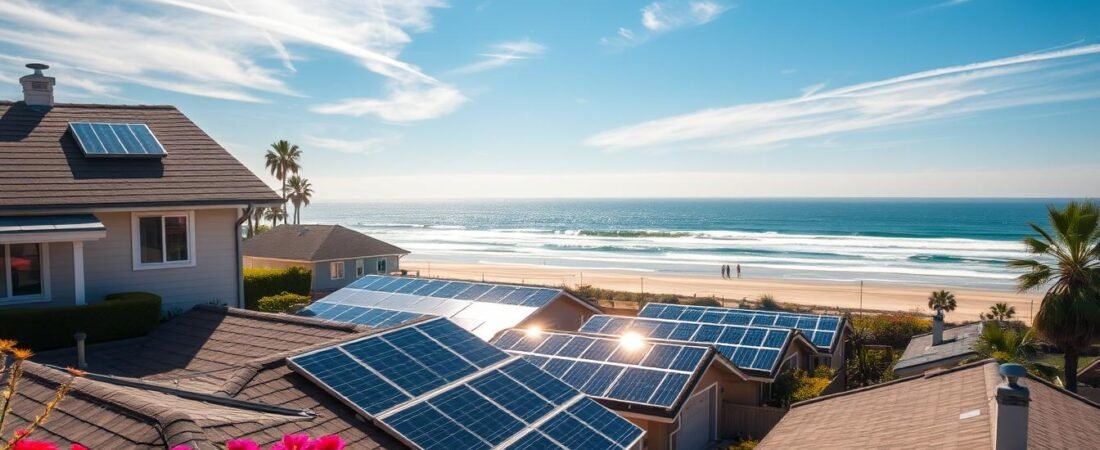
Rising electricity rates are pushing many homeowners to explore clean energy for their roofs. In Oceanside and the greater San Diego area, utility bills are notably high: California averages 31.86 ¢/kWh in 2024, while San Diego Gas & Electric charges about 45.50 ¢/kWh.
This short guide explains how a residential system can lower bills and lock in savings. We cover the installation process, picking trusted contractors, and using a solar calculator that matches system size to your home’s needs.
You’ll also learn how federal and state incentives, rebates, and net billing rules change the investment math. Battery storage and time-of-use rates can boost production value during peak hours.
For detailed local figures and example system sizes, see the local cost data. This article will help you decide if installing a system is the right financial move for your home.
Understanding the Solar Landscape in Oceanside
The region benefits from abundant sunshine and a strong installer network. A well-designed system can lock in predictable energy rates and boost long-term savings for your home.
California ranks first in the nation for residential installations in 2024. That status drives competition and quality among local firms. Stellar Solar, located at 265 Via del Monte, has served the area for over two decades.
Homeowners in the San Diego region can use rooftop systems to reduce reliance on traditional utilities. Upgrading to clean power also helps protect property value and supports state renewable goals.
Understanding the local market makes it easier to compare equipment, warranties, and installers. As more homes add solar panels, the neighborhood grid grows more resilient and efficient.
Start by listing your energy needs and local rates. That groundwork makes choosing the right system and installer clearer and helps you maximize long-term savings.
Factors Influencing Solar Panel Cost Oceanside
Several variables shape what homeowners in the San Diego area actually pay for a rooftop system. Size, equipment tier, and installation complexity create most of the price variance. Knowing the drivers helps you compare quotes and plan your investment.
System Size Requirements
System capacity is the top determinant of total price. In San Diego, average rates ran about $2.25–$2.75 per watt in recent years. That means a typical 6 kW setup often costs roughly $10,000–$12,000 before incentives.
Choosing the right size depends on your annual electricity use and roof space. A larger system raises upfront costs but increases long-term savings and energy independence.
Equipment Quality and Efficiency
Higher-efficiency modules and premium inverters raise upfront expense but cut the number of units needed. That can shrink the roof footprint and improve lifetime production.
Don’t forget mounting hardware, permitting, and professional assessment. A thorough roof evaluation during installation ensures performance and avoids costly rework.
- Compare multiple bids to balance size, equipment, and warranties.
- Factor in rebates and incentives to lower net investment.
Current Electricity Rates and Your Potential Savings
San Diego Gas & Electric customers face steep electricity rates today at 45.50¢ per kWh. That is roughly 184% higher than the national average and makes on-site generation a strong financial hedge.
Local households that adopt solar systems can see major long-term savings. A typical San Diego home may avoid about $100,000 in utility bills over 25 years by offsetting grid usage.
Most installations in the region pay back in roughly 3.5 to 4.5 years. After payback, the energy you generate is essentially free, which boosts property value and monthly cash flow.
Net metering helps by crediting exported power to the grid, lowering bills when the sun is down. Rising utility rates also keep increasing the value of that avoided expense.
- Start by tracking your current electricity use to estimate realistic savings.
- Factor in local incentives and rebates when comparing system offers.
- Compare multiple quotes for installation and warranty terms.
| Metric | San Diego | Typical Payback | 25‑Year Savings |
|---|---|---|---|
| Electricity Rate | 45.50¢/kWh (SDG&E) | — | — |
| Average Payback | — | 3.5–4.5 years | — |
| Estimated Savings | — | — | ~$100,000 |
| Key Benefits | Hedge vs. rising rates | Increased property value | Lower long-term energy costs |
Federal and State Financial Incentives
Good news: federal credits plus California programs make clean energy more affordable for many households. These incentives lower upfront expenses and speed up payback for a residential system.
SGIP provides rebates for battery storage in San Diego. Homeowners may see rebates of $150–$500 per kWh for qualifying residential battery systems. That support reduces the overall installation expense for storage paired with an energy system.
Disadvantaged Communities Programs
DAC‑SASH, run by GRID Alternatives, helps low-income homeowners. It offers about $3 per watt toward rooftop panels. This cuts the net cost and improves access to renewable energy for underserved residents.
Solar on Multifamily Affordable Housing (SOMAH)
Multifamily affordable properties can get funding to serve tenants and shared spaces. These grants lower installation barriers and boost property equity while reducing utility bills for renters.
- The Residential Solar and Storage Equity (RSSE) program: up to $21,700 for solar and $11,000 for batteries for eligible households.
- State rebates and federal tax incentives combined can trim upfront costs and accelerate savings.
- Apply early and follow program checklists to secure maximum rebates.
| Program | Typical Benefit | Who Qualifies |
|---|---|---|
| SGIP | $150–$500 / kWh (battery) | Residential & commercial |
| DAC‑SASH | $3 / watt (panels) | Low‑income homeowners |
| RSSE | Up to $21,700 solar; $11,000 battery | Qualified households |
Tip: work with an installer familiar with these programs. They can guide paperwork, verify eligibility, and help you claim the largest rebates available. This approach maximizes savings and lowers your system costs.
Navigating Net Billing Tariff Policies
Since April 14, 2023, California switched to the Net Billing Tariff (NEM 3.0), which changed how exported generation is credited.
Under the new rules, excess energy is credited at time‑varying wholesale rates. That typically equals about 25% of retail value. This makes storing daytime production far more valuable than exporting it.
Maximizing Credits with Battery Storage
Pairing batteries with your system lets you store midday production and discharge during high‑value evening hours. That increases monthly savings and reduces reliance on the utility during peak rates.
Storage also provides backup power for your home during outages. Choosing the right battery capacity depends on your typical evening load and local time‑of‑use rate windows.
- Configure your system to charge when wholesale credits are low and discharge when retail rates spike.
- Work with an experienced san diego installer who understands local rates, incentives, and grid rules.
- Size storage to match typical evening consumption for maximum production capture and long‑term savings.
Bottom line: under NEM 3.0, batteries turn exported production into usable value. Smart pairing of panels and storage protects property energy needs while boosting financial returns from your system.
Comparing Solar Financing and Leasing Options
Financing choices shape whether your home sees instant savings or higher lifetime gains.
San Diego homeowners can choose loans, PACE programs, or leases and PPAs. Each option changes who claims incentives and how much you save each month.
PACE financing lets you repay an installation through your property tax bill over 10–20 years. That spreads the payment and ties it to the property rather than the homeowner.
- Leases and PPAs require little or no up-front investment and shift maintenance to the provider.
- Buying with a loan or cash lets you claim federal tax credits and capture long-term savings.
- Many installers in San Diego offer $0‑down options to reduce immediate bills.
| Option | Up‑front | Who Owns | Key Benefit |
|---|---|---|---|
| Purchase (loan/cash) | Variable | Homeowner | Tax credits, higher lifetime savings |
| PACE | Low to none | Homeowner (linked to property) | Long term repayment via taxes |
| Lease / PPA | $0 | Provider | Immediate savings, provider handles maintenance |
Compare total costs, incentives, and expected energy production before deciding. That careful review helps align your investment with household goals and rates.
Evaluating System Size and Energy Production
Sizing a rooftop system starts with matching daily electricity use to local sun exposure. San Diego averages 266 sunny days per year, which boosts annual production and improves returns.
Use a solar calculator plus your bills to estimate needs. A typical San Diego home needs about 5.8 kW to reach near self-sufficiency. That figure guides equipment and installation decisions.
Seasonal Production Variations
Production peaks in summer and drops in winter. Plan for those swings so your system supplies daytime power when the grid demand and rates rise.
“Properly sized systems reduce reliance on the utility and increase long-term savings.”
Estimating Your Home Needs
Start with 12 months of electricity bills. Factor in future changes like an EV charger or increased appliance use.
- Match average daily kWh to system output and roof orientation.
- Allow margin for cloudy days and inefficiencies.
- Size to cover peak evening loads with storage or net metering credits.
Tip: optimizing for peak production ensures the panels deliver maximum savings over a 25-year lifespan and protects your property from rising rates and utility volatility.
Selecting a Reputable Solar Installer
Choosing the right installer makes the difference between a reliable system and endless maintenance headaches.
Start local and check track record. Stellar Solar has been voted “San Diego’s Best Solar Company” nine times in 11 years. Smart Solar Design Construction of Southern California holds an A+ from the Better Business Bureau.
Vet contractors by reading verified reviews from san diego residents and by confirming licenses and insurance. A professional firm will handle the full process, from permits to rebate paperwork.
When you interview contractors, ask about experience installing solar panels on homes like yours. Request a clear, all-inclusive quote that lists system size, equipment quality, and expected production.
Avoid firms that give vague estimates or hide fees. The best contractors explain warranty terms and show past projects.
- Verify ratings: check BBB and customer reviews.
- Ask for references: speak with local residents who had similar installations.
- Demand transparency: clear quotes and timelines protect your investment.
For a local contractor directory and to compare bids, see Oceanside installer listings on SolarReviews. Choosing a verified, experienced partner gives you confidence that your system will deliver lasting energy value.
Long Term Property Value and Tax Benefits
Adding a home energy system can raise resale appeal without triggering higher property taxes. This makes the project a smarter long-term investment for many buyers in the San Diego market.
Active Solar Energy System Property Tax Exclusion
California law shields homeowners from reassessment when they install solar panels. That means the added value from panels is exempt from increased property taxes.
How this helps:
- The exclusion prevents your property taxes from rising after you install solar.
- It applies to systems completed before January 1, 2027, so timing matters.
- The benefit is automatic when you file a building permit—no extra form is required.
“Installing panels can increase resale value by as much as $16,000 in the San Diego market.”
| Benefit | Effect | Note |
|---|---|---|
| Property tax exclusion | Taxes unchanged after installation | Automatic with building permit |
| Resale value | Up to ~$16,000 increase | Local market boost in San Diego |
| State incentives | Combine with federal credits | Maximizes return on investment |
| Timing | Deadline: systems done by 1/1/2027 | Good reason to act now |
When you install solar panels, you protect your property value and improve monthly savings. Work with a trusted local installer to align incentives and make the most of your investment.
Conclusion
Deciding on a home energy upgrade starts with clear numbers and trusted contractors. Request multiple quotes for a solar panel installation and compare projected production, warranties, and incentives.
Understand the true cost solar brings by factoring rebates, net billing impacts, and property tax exclusions. A straight comparison of panel installation offers helps you pick equipment that matches your needs and budget.
With the right size and a reputable local team, San Diego homeowners can lock in long-term savings and greater energy independence. Take the next step: request bids from verified installers and see how much solar can improve your home.