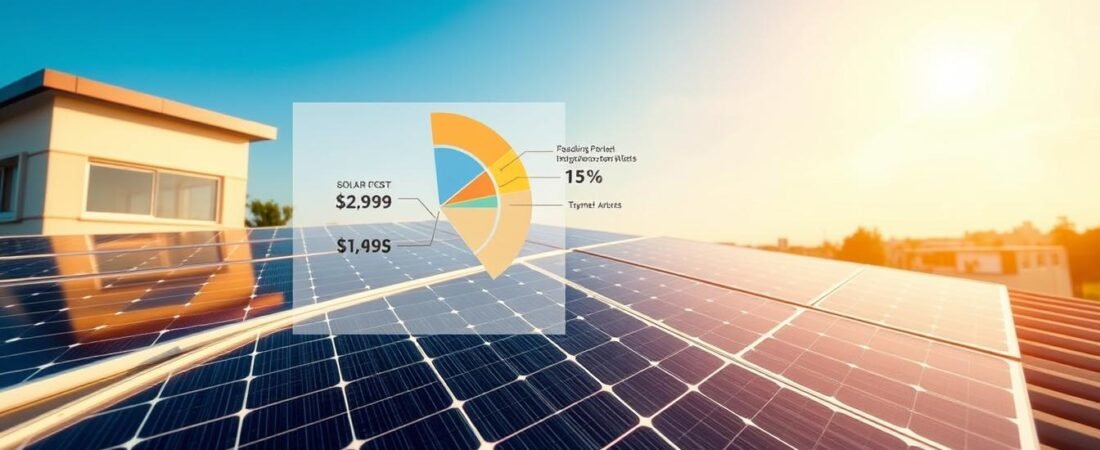
Thinking about a rooftop energy upgrade? In 2026, a typical solar system runs about $2.50 to $3.30 per watt. A standard 6-kilowatt setup often lands near $15,000 to $20,000 before incentives. These numbers help homeowners plan a smart investment and compare quotes from a local company.
Local incentives, roof size, and your household power needs shape the final price. Choosing the right equipment and installer can save you thousands and lower your monthly energy bill. Evaluating both upfront expense and long-term savings gives the clearest view of value when installing solar.
Understanding the Factors Influencing the Total Cost of Solar Panel Installation at Home
Estimating what you’ll pay starts with the per-watt price and how large a system you need.
The 2026 per watt range is about $2.50 to $3.30 per watt. That number sets the baseline for most quotes. Larger arrays raise the up-front bill, but they also increase long-term savings.
Installing solar is a long-term investment. Properly sized systems can deliver reliable power for 25 to 30 years. Over time, reduced utility bills and added property value often justify the initial expense.
Complex site work or unusual roof designs can push the final price higher. That’s why homeowners should evaluate the whole architecture, not just individual parts.
| Element | Why It Matters | Typical Impact |
|---|---|---|
| Per-watt rate | Determines baseline price | High impact |
| System size | Matches household power needs | Medium to high |
| Installation complexity | Adds labor and parts | Variable |
Core Equipment Components Driving Your Quote
Major hardware choices shape both upfront pricing and long-term performance.
Solar Panels and Efficiency
High-efficiency solar panels cut the number of units you need. For example, the EcoFlow 400W model reaches about 23% conversion, which helps when roof space is limited.
Fewer panels can lower mounting and labor demands. That can improve return on your investment over the coming years.
Inverter Technology
Inverters turn DC into usable electricity for your home. You can pick string inverters or microinverters.
Microinverters boost per-panel output in shaded or complex roofs but raise equipment costs. String inverters cost less but can reduce production if one panel underperforms.
Racking and Mounting Hardware
Racking secures panels to the roof and varies by roof type and pitch. Complex mounts add labor and parts, which shows up on the quote.
Permitting and inspection fees are often bundled with installation costs. Skilled installers reduce error risk and ensure systems meet local codes.
| Component | Impact on Quote | Typical Notes |
|---|---|---|
| High-efficiency panels | Lowers number of panels required | Higher unit price, better long-term output |
| Inverter type | Affects electricity yield | Microinverters vs. string inverters tradeoffs |
| Racking & mounting | Adds labor and parts | Varies by roof material and complexity |
| Permits & fees | Administrative expense | Required for code compliance |
How Regional Sunlight and Climate Impact Your Budget
Regional sunlight levels directly change how many panels you need and what you pay.
In high-irradiance zones like Arizona or California, a smaller system can meet the same energy needs. That means fewer solar panels and lower installation costs per watt for many homeowners.
Cloudier places such as New England or the Pacific Northwest need more panels to match output. More units raise equipment expenses and extend the time it takes to recoup your investment in years.
Harsh climates bring extra expenses. Heavy snow or strong winds require reinforced mounts and more labor. That raises installation costs and affects long-term reliability.
- Optimize design: use high-efficiency solar panels if roof space is limited.
- Check orientation: roof pitch and sun hours determine electricity yield and savings.
- Plan for labor: regional crew availability can shift per-watt pricing.
| Region | Typical Sunlight | Impact on Panels Needed | Common Added Costs |
|---|---|---|---|
| Southwest (AZ, CA) | High | Fewer panels | Lower per-watt equipment cost |
| Pacific Northwest | Low | More panels | Higher system expense |
| Cold, snowy areas | Variable | May need robust mounts | Increased labor and mounting costs |
Navigating State and Local Financial Incentives
State and local programs can shave thousands from your rooftop energy investment.
Federal tax credit: The Federal Investment Tax Credit (ITC) lets homeowners claim up to 30% of their system costs as a tax credit. That reduction lowers your federal income tax liability and shortens the payback years.
State and local help: States like California, New York, and Massachusetts offer rebates and property tax exemptions that further reduce upfront bills. Performance-based incentives (PBIs) can also pay for the electricity your system produces over many years.
- Claim the ITC to cut federal tax owed by 30% of eligible system expenses.
- Check for state rebates, property tax breaks, and PBIs to boost savings.
- Work with a reputable company to ensure every available credit and rebate is applied correctly.
| Program | What it does | Typical benefit |
|---|---|---|
| Federal ITC | Tax credit | Up to 30% |
| State rebates | Reduces upfront fees | Varies by state |
| PBIs | Payments per kWh | Ongoing income |
The Role of Roof Characteristics and Site Conditions
Roof type and site conditions determine how many panels fit and how much labor a crew will need.
Roof Material and Structural Integrity
Asphalt shingle roofs are the most straightforward for mounting. They usually cut installation time and lower labor needs.
Tile, slate, or steep pitches demand special hardware and more crew hours. That raises per watt and installation costs.
Older roofs sometimes need reinforcement before adding any solar panel array. An upfront repair protects your property and the system for years.
Shading and Orientation
Trees, chimneys, or nearby buildings can reduce electricity production. Installers may add microinverters or redesign layouts to limit loss.
Proper roof pitch and southern exposure maximize output. A good site survey helps avoid surprises like extra fees or higher labor time.
- Check roof age and structure before quoting.
- Plan trimming or selective panel placement to reduce shading losses.
- Ask for a detailed quote that lists labor, mounting, and per watt adjustments for tricky sites.
Hidden Ongoing Costs of Solar Ownership
Owning a rooftop energy system brings a few steady, sometimes overlooked bills.
Insurance and property coverage: Many homeowners must raise their property insurance limits after adding solar panels. That increase can nudge monthly premiums higher for several years.
Cleaning and upkeep: Professional cleaning for panels ranges from a few hundred to a few thousand dollars depending on system size. Regular maintenance keeps output steady and protects your investment.
Monitoring subscriptions: Reliable internet monitoring helps spot production drops. Expect service fees around $50–$100 per year for full-featured plans.
- Ground-mounted systems may add landscaping or vegetation control costs over the years.
- Some owners pay for extended monitoring or warranties to reduce surprise repair bills.
- Factor these ongoing amounts into your payback timeline to see true net savings.
| Charge Type | Typical Annual Range | Why it Matters | Action |
|---|---|---|---|
| Insurance premium | $50–$300+ | Protects property and array | Check policy and shop rates |
| Professional cleaning | $200–$2,000 | Maintains panel output | Schedule as needed, esp. in dusty areas |
| Monitoring subscription | $50–$150 | Tracks electricity production | Pick bundled plans when available |
| Landscaping/vegetation | $50–$500 | Prevents shading for ground systems | Plan routine trimming |
Bottom line: These recurring costs are usually small compared with the thousands saved on electricity over decades. Still, counting them gives homeowners a clearer view of long-term payback.
Utility Policies and Grid Interaction Fees
How your utility credits and time-based rates interact with exported power can change your long-term savings.
Net metering lets you send extra electricity back to the grid and receive credits that lower your monthly bill. Credit rules vary by utility, so what you earn for exported power may differ significantly across service areas.
Time-of-use (TOU) rates charge more during peak hours and less at night. That pricing can raise or lower the value of production from your system depending on when your panels generate electricity.
- Check how your utility credits exported energy to estimate real savings and payback years.
- TOU plans reward shifting heavy energy use to midday when production is highest.
- Even with panels, you may still pay small monthly utility fees like delivery or customer charges.
- If your system under-produces, your company will bill the extra electricity drawn from the grid.
Tip: Learn your local grid rules and review avoided-cost or credit rates—see avoided-cost rates for details on valuation and programs avoided-cost rates. That step helps you calculate the true return on your investment and plan system sizing to maximize savings.
Strategies for Maximizing Your Solar Investment
Smart equipment choices let homeowners scale capacity without a huge upfront bill.
Start with efficiency. Invest in high-efficiency solar panels to reduce how many panels you need. Fewer units shrink roof clutter and lower installation costs per watt.
Choose modular solutions like EcoFlow so the system grows with your needs. That approach eases initial expense and gives flexibility if electricity use rises.
Pair panels with battery storage to store midday energy for peak-rate hours. This boosts self-consumption and speeds payback in just a few years.
- Pick a reputable company that offers strong warranties and monitoring.
- Position each panel for best sun exposure to maximize power and long-term savings.
- Plan site-specific tweaks to avoid extra installation costs later.
Bottom line: Thoughtful design, efficient equipment, and smart storage make your investment pay off faster and reduce ongoing energy bills.
Conclusion
, Investing in a modern PV setup can reduce your utility payments and stabilize energy bills for years. This choice is a smart long-term investment that often delivers substantial savings and added property value.
Research local incentives and pick high-efficiency equipment to boost your financial payback. Plan for routine upkeep and review grid rules so you know how credits will work. These steps help you build a clearer budget and a stronger return.
Next step: talk with professional installers to get a tailored plan that matches your needs and climate. With thoughtful design and the right incentives, reliable clean power is within reach for most households.