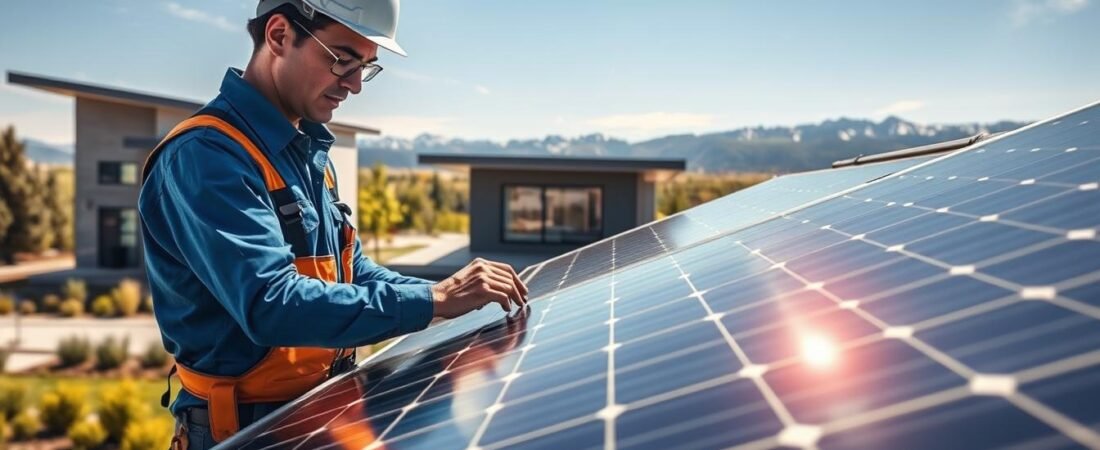
Restore your energy fast with a local team that puts clarity and safety first. Dutch Creek Electric offers licensed, insured technicians who diagnose the system, fix underperforming equipment, and handle weather damage so your solar system produces reliably again.
We keep costs clear and offer an upfront plan after inspection. Expect work that targets long-term performance, not quick patches.
Local experience matters in Colorado storms, from snow and hail to intense sun. That knowledge helps pinpoint issues and speed up repairs so you keep savings and protect your investment.
Ready to schedule? Call (303) 622-3744 or send an online message to request an inspection and fast service across the metro area.
Trusted Solar Panel Repair for Denver Homes and Businesses
When production dips, a prompt, skilled response can protect your system and your savings. Our local company serves homeowners and business owners who need dependable work to restore solar panels and stabilize energy output.
Licensed, insured technicians arrive with training on the latest equipment and safety standards. They diagnose faults quickly so small issues don’t become expensive failures.
Safety matters: damaged wiring, loose mounts, and inverter faults carry electrical risks. Only a licensed team should handle those hazards to keep installations code-compliant.
How trusted service looks in practice
- Clear communication and transparent recommendations.
- No surprise changes once the assessment is agreed.
- Targeted fixes that protect long-term performance and efficiency.
Working with a local company means faster response times and a partner focused on reliable solar service. Better repairs lead to more consistent solar power, improved efficiency, and confidence in your solar investment.
“Transparent work and trained technicians keep systems safe and producing as expected.”
| Client | Common Issue | Outcome |
|---|---|---|
| Homeowners | Production drop after storm | Fast diagnosis, restored energy output |
| Business | Inverter alerts and outages | Safe fixes, minimal downtime |
| Property managers | Mounting and wiring concerns | Code-compliant repairs, improved performance |
Next: Many problems appear first as lower production, alerts, or visible damage. A quick inspection reveals the right path forward.
Signs Your Solar System Needs Repair or Professional Inspection
A measurable fall in generation is the clearest early warning that parts of your system may need attention. Watch daily or weekly output totals and compare them to past performance.
Drop in energy production and decreased efficiency: A noticeable reduction in power often means debris buildup, worn components, or electrical faults. Timely inspection preserves efficiency and avoids larger problems.
Visible damage after hail, debris, or heavy snow
Cracks, punctures, or bent mounts are common after storms. Heavy snow or wind-blown debris can stress modules and hardware, causing hidden faults.
Inverter alerts, error codes, or inconsistent output
The inverter controls conversion to usable power. Alerts or intermittent output indicate faults that testing can find quickly.
Loose wiring, mounting concerns, and electrical risks
Loose connections and compromised mounts affect safety and performance. Avoid touching suspected damaged equipment. Call a technician for a professional inspection.
“Annual inspections and checks after severe weather catch most issues before they worsen.”
| Indicator | What it suggests | Recommended action |
|---|---|---|
| Lower daily output | Conversion or shading issues | Schedule an inspection and diagnostics |
| Visible cracks or dents | Physical damage from weather | Replace or repair affected modules after testing |
| Error codes or outages | Inverter or wiring faults | Inverter testing and electrical safety check |
Next steps: A technician verifies the root cause with targeted diagnostics rather than replacing parts unnecessarily. The right approach depends on whether the fault is with a module, inverter, wiring, or overall system performance.
solar panel repair denver: Repair Services We Provide
We begin by testing the entire installation so you get a clear diagnosis and targeted fixes.
Comprehensive system diagnosis and performance testing includes visual checks, output logging, and electrical tests to pinpoint faults. This step prevents unnecessary parts replacement and restores consistent output.
Inverter troubleshooting and solar inverter repair
Inverter checks follow alerts, error codes, and voltage/output tests. Technicians decide between on‑site inverter repair or replacement based on age, fault type, and safety.
Panel repair for cracks, hot spots, and weather-related damage
Technicians inspect cells for cracks, hot spots, or moisture entry. Some modules can be refurbished; others require replacement for reliable long‑term operation.
Wiring, connections, and safety component repairs
We fix loose terminals, damaged conduit, and grounding issues with a safety-first approach to reduce electrical risk.
Maintenance and removal/reinstallation support
Regular maintenance—cleaning, torque checks, and inverter testing—keeps problems from recurring. We also provide safe removal and reinstallation during roofing work to protect your investment.
| Service | What it covers | Benefit |
|---|---|---|
| Full diagnostics | Output logging, visual and electrical tests | Accurate fixes, less downtime |
| Inverter service | Error codes, voltage checks, repair or replace | Restored conversion and reliability |
| Wiring & maintenance | Connections, grounding, cleaning | Fewer repeat issues, longer life |
“Our goal is to minimize downtime and protect long‑term performance.”
Denver-Specific Challenges That Impact Solar Panels
Local weather patterns in the Front Range create stresses that affect how well your system produces over time. Understanding those risks helps protect output and your long-term investment.
Snow, fluctuating sunlight, and short-term loss
Heavy snow can temporarily reduce production and, if left unchecked, add weight and stress to mounts. That stress can lead to physical damage and poorer efficiency over time.
Seasonal light swings are normal. Still, a big, persistent drop in daily numbers suggests a fault rather than normal variance.
High-altitude UV exposure
Stronger UV at altitude accelerates wear on cells, seals, and connectors. Over years this can show as steady efficiency decline or earlier component degradation.
Compliance and local knowledge
Staying code-compliant matters. Repairs and service work must follow Colorado energy rules and local requirements to avoid rework or penalties.
Our company uses region-specific experience to pick fixes that hold up through snow, sun, and wind. Timely inspections after major storms protect energy savings and the overall investment.
| Issue | Impact | Recommended action |
|---|---|---|
| Snow buildup | Short-term production drop, mounting stress | Schedule post-storm inspection |
| Seasonal sunlight swings | Normal variance vs. abnormal drop | Compare historic output; test if low |
| High UV | Gradual efficiency loss | Plan preventive checks and component replacement |
“Timely, local service prevents small issues from becoming costly failures.”
Our Repair Process: Clear Communication, Efficient Work, Reliable Results
Clear steps and open communication guide how we diagnose and restore system performance.
On-site inspection and full diagnostics
Technicians arrive to log production, inspect physical condition, check wiring integrity, test inverter status, and confirm mounting safety. This inspection gives a true picture of system health quickly.
Transparent assessment and upfront pricing
We explain what’s urgent, what can wait, and the options available before any work starts. Upfront pricing helps you decide with confidence and no pressure.
Targeted repairs and minimized downtime
We isolate failed components and focus fixes that restore output fast. Simple work may finish the same day; complex troubleshooting takes more time, with updates at every step.
Post-repair testing and ongoing maintenance
After repairs we verify efficiency, clear alerts, and confirm stable monitoring. Regular maintenance and annual inspections catch minor issues early and protect long-term performance.
“A clear process saves time and keeps systems reliable.”
If production is down or your system shows warnings, schedule service today for a thorough inspection and a transparent plan.
Why Homeowners Choose Our Team for Reliable Solar Repair in Denver
Homeowners pick our crew because we fix roots, not symptoms, and keep communication simple.
Decade-plus experience: Established in 2010, the company brings deep experience diagnosing complex faults and restoring performance for each home.
Ongoing training and proven expertise
Technicians train continuously on inverters, monitoring, and safety standards. That keeps our services current and effective.
Quality workmanship and a satisfaction guarantee
We prioritize quality-first work. A clear satisfaction guarantee reduces risk and protects your investment.
Local accountability and industry partnerships
Our local team is easy to reach for follow-up maintenance and annual checks. Partnerships (including Qmerit) help deliver efficient, modern energy solutions.
“Consistent communication, dependable scheduling, and repairs that solve the root cause.”
| Why it matters | Benefit to homeowners | What we deliver |
|---|---|---|
| Decade-plus experience | Faster, accurate diagnosis | Proven fixes that restore output |
| Ongoing technician training | Up-to-date service methods | Safer, more reliable services |
| Local accountability & partners | Quick follow-up and modern solutions | Protected long-term investment |
Ready today? Contact our team for an inspection and a clear repair plan that protects your home energy investment.
Conclusion
A fast response restores reliable power and protects your investment from worsening damage. Timely service keeps production steady for both home and business systems and protects long‑term energy savings.
If you see visible damage, inverter warnings, drops in output, or any electrical risk, schedule professional work. Common services include diagnostics, inverter fixes, panel repair, wiring corrections, and ongoing maintenance to prevent repeat problems.
Local weather—snow, hail, and intense sun—stresses equipment over time, so region‑specific inspections matter. Don’t wait: small issues can grow into costly downtime.
Call (303) 622-3744 or message online to book an inspection today. We offer clear communication, upfront pricing, and a focus on a safe, efficient system that protects your investment.