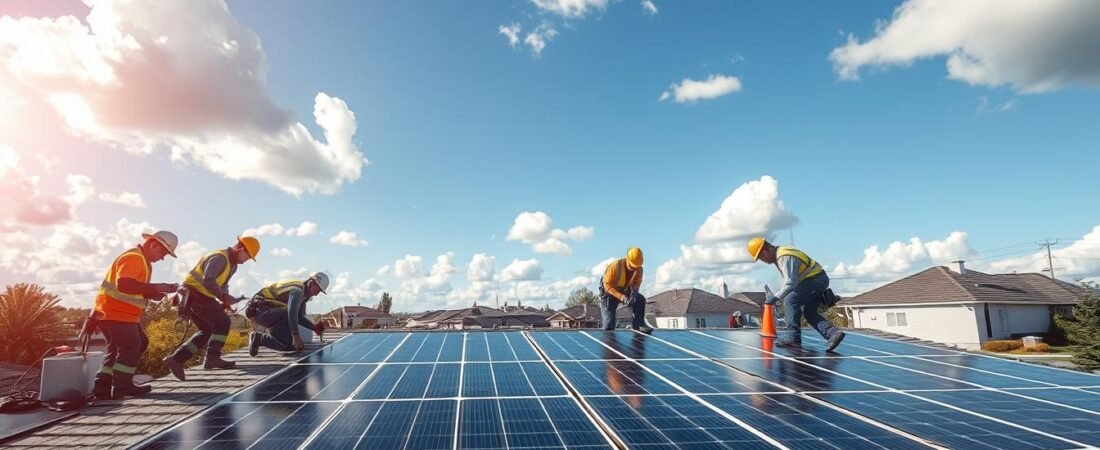
Embarking on a solar panel installation dayton ohio project empowers homeowners to take charge of energy bills and local resources. This short guide lays out the key steps you need to know to move forward with confidence.
Rising utility costs have pushed many residents to consider alternatives. As of 2026, choosing renewable power can reduce monthly expenses and add long-term home value.
We cover site assessments, roof requirements, permitting, and the final interconnection approval you’ll need from local officials. Our expert tips also explain how to compare providers and warranties so you can pick the best fit.
Ready to learn more? Check a local provider page for details and programs that may lower costs, such as financing options and guarantees: Palmetto Dayton guide.
Why Dayton Homeowners Are Switching to Solar
Homeowners here are shifting to on-site generation to reduce exposure to volatile electricity markets.
Electricity prices rose 31% between 2020 and 2024, so many residents now view clean power as a practical way to protect household budgets.
Generating power at home locks in predictable costs for many years and lowers monthly bills.
- Lower reliance on the grid reduces a household’s monthly bill and adds financial security.
- Long-term savings often outweigh the upfront cost for the average family.
- Each year more homeowners find that solar panels deliver reliable energy and steady savings.
“Switching to renewables gave us consistent bills and peace of mind.”
In short: as utility costs climb, adopting solar power becomes both a financial strategy and a step toward greater independence.
Understanding the Solar Panel Installation Dayton Ohio Process
Understanding each phase lets homeowners track progress and avoid surprises during the setup. A clear plan helps everyone stay on schedule and keeps the project efficient.
Site Assessment and Permitting
First, a professional visits your home to evaluate roof condition, shade, and orientation. This site assessment determines the best system size and layout.
Once approved, your installer files permits and documentation with local agencies. Proper paperwork speeds up final approvals and reduces delays.
The Installation Timeline
Physical work usually takes one to three days. Crews set racking, run wiring, and mount panels with care to protect your roof and landscaping.
- A local inspector signs off for grid interconnection after the work is complete.
- Choosing a reputable solar company ensures each step meets safety and performance standards.
- Homeowners can expect the provider to manage design, permits, and final activation.
In short: a structured approach minimizes disruption, controls cost, and delivers a reliable solar panel system on predictable time.
Financial Benefits and Long-Term Savings
Choosing a renewable system often delivers steady savings that stack up over decades. In Dayton, a typical home can save an average of $64,000 over 25 years by going solar.
That figure reflects reduced electricity bills and protection from rising utility rates. A high-quality system lets homeowners generate clean energy that offsets monthly costs and builds value.
- Lowered monthly electricity bills add up to substantial long-term savings.
- Annual savings improve cash flow and reduce exposure to rate hikes.
- The system typically pays for itself within a number of years, then continues to save money.
Every year of operation increases cumulative savings and strengthens the return on your initial cost. For homeowners looking to protect their budget, going solar is a long-term financial strategy that offers steady value.
Comparing Solar Financing Options
How you pay for a system affects ownership, monthly bills, and long-term value. Compare cash, loans, and leases so you can pick the right path for your home and budget.
Cash Purchases
Paying in cash means a larger up-front cost but no monthly payments. You own the system outright and get full energy savings over the years.
Cash buyers also claim the tax credit and avoid loan interest, which often increases total savings.
Solar Loans
Loans let homeowners spread the cost while keeping ownership. Monthly payments may be offset by reduced electricity bills from day one.
Many loan terms let you build equity as you save money on power and price volatility.
Leases and Power Purchase Agreements
With a lease or PPA, a provider owns the panel system and handles maintenance for years. You pay a set rate or monthly fee and often see immediate savings with little money up front.
“The provider may claim the federal tax credit and pass savings to you through lower monthly payments.”
- Leases: low or no up-front price, predictable monthly cost.
- PPA: pay per kWh; provider maintains the system and warranties.
Bottom line: cash maximizes long-term savings, loans balance cost and ownership, and leases/PPA reduce risk and start savings fast. Choose the option that fits your finances and comfort with managing the system.
Navigating Local and Federal Incentives
Local and federal programs can cut upfront costs and shrink monthly loan payments for homeowners considering clean energy systems.
The Ohio Treasurer’s ECO-Link program offers a 3% interest rate reduction on loans up to $50,000 for qualifying projects. This incentive helps lower financing cost for a residential installation and reduces monthly payments.
At the federal level, available tax credit options—such as IRS Section 25D for battery storage—can further lower your net cost. Claiming a qualifying tax credit shortens the payback years for your system.
Before you finalize financing, consult a current list of participating banks to confirm eligibility for ECO-Link and other rebates. Lenders must opt into the program for the rate reduction to apply.
Combine local incentives and federal tax credits to make high-quality solar panels and related systems more affordable. Always verify the current status of any incentive with a qualified professional to ensure your project meets all requirements.
Performance Expectations in the Ohio Climate
How a rooftop system behaves across seasons depends on local sun patterns, temperature, and weather.
Reviewing historical data helps set realistic expectations for annual output and savings.
Seasonal Energy Production
National Renewable Energy Laboratory data shows the region receives enough peak sun hours to produce meaningful electricity all year.
A 10 kW solar panel system can offset about 10 tons of CO2 annually, highlighting the environmental benefit of a quality installation.
- Summer: highest generation, often matching peak household demand.
- Winter: lower totals, but modern panels still provide reliable power on sunny, cold days.
- Using historical performance data lets owners estimate yearly yields and billing impact.
| Season | Expected Output | Peak Sun Hours (avg) |
|---|---|---|
| Summer | 35% of annual yield (highest) | 5.0–6.0 hrs |
| Spring/Fall | 45% combined (moderate) | 3.5–5.0 hrs |
| Winter | 20% of annual yield (reduced) | 2.5–3.5 hrs |
Investing in high-performance systems and correct sizing ensures your home remains energy-efficient through changing seasons.
Use verified data when planning so you can forecast savings and carbon reductions over the years.
How Utility Rates Impact Your Solar ROI
The price your utility charges per kWh is one of the strongest drivers of return on investment for a home energy system.
In the average dayton household, local rates shape how fast a system pays back. AES Ohio charged 16.4¢/kWh in 2023, which is above the national average. That higher price means homeowners who generate their own power often see faster savings.
Rising electricity prices raise the cost of doing nothing. Locking in predictable power costs protects your home from sudden hikes. Over the years, that stability can be the biggest source of value.
| Metric | Local Rate | Impact on ROI |
|---|---|---|
| Average retail price | 16.4¢/kWh (2023) | Shorter payback vs lower-rate areas |
| Rising electricity | Year-over-year increase | Increases lifetime savings |
| System offset | % of home energy | Direct reduction in monthly cost |
Bottom line: compare local rates when modeling savings. The greater the gap between utility price and your system output, the better your long-term financial outcome.
Evaluating Solar Companies and Installers
A trustworthy installer reduces surprises and speeds up the whole process. Start by checking each company’s track record and the number of completed projects. For example, Palmetto has finished 1,335 installations in Ohio since 2020, which shows experience and scale.
Read customer reviews to learn how teams handle timelines, cleanup, and post‑project service. Reviews reveal workmanship quality and whether a company honors warranties.
- Look for transparent pricing and a clear estimate of how much solar energy your home can produce.
- Ask for a list of references and recent installs to verify quality and performance.
- Compare at least three companies dayton to find the best match for cost, time, and service.
Pick a company that explains system performance in plain terms and offers solid warranties. If you want a commercial-focused comparison, consider a provider guide like choosing the right commercial provider. For detailed service options, review a local installer’s offerings at service listings.
“A reliable company makes the project predictable and supports you after activation.”
Increasing Your Home Value with Renewable Energy
Research shows homes with solar panels sell for about 4.1% more than similar homes. That premium reflects buyers valuing lower monthly energy costs and long-term savings.
When you own the solar panel system, buyers treat it as a permanent improvement. Ownership usually boosts an estimate of resale value more than a leased arrangement.
Reducing the home’s electricity bill makes the property more attractive to cost-conscious buyers. A clear estimate of increased value helps homeowners weigh cost versus benefit.
- Owned systems add lasting value and appeal to future homeowners looking for lower bills.
- Leased systems still cut monthly power bills but may not raise sale price as much.
- High-quality panel systems also protect the roof and improve curb appeal.
“A documented energy upgrade can simplify buyer decisions and speed a sale.”
Conclusion
, Finally, using available incentives and smart financing can make a panel installation affordable and worthwhile for your home.
Take advantage of solar incentives and the federal tax credit to lower up-front costs and shorten payback time.
Research providers, compare quotes, and ask clear questions about warranties and expected savings. Good planning helps homeowners secure predictable energy costs and added property value.
In short: combining incentives, solid offers, and careful selection turns clean power into a practical long-term investment for your family.