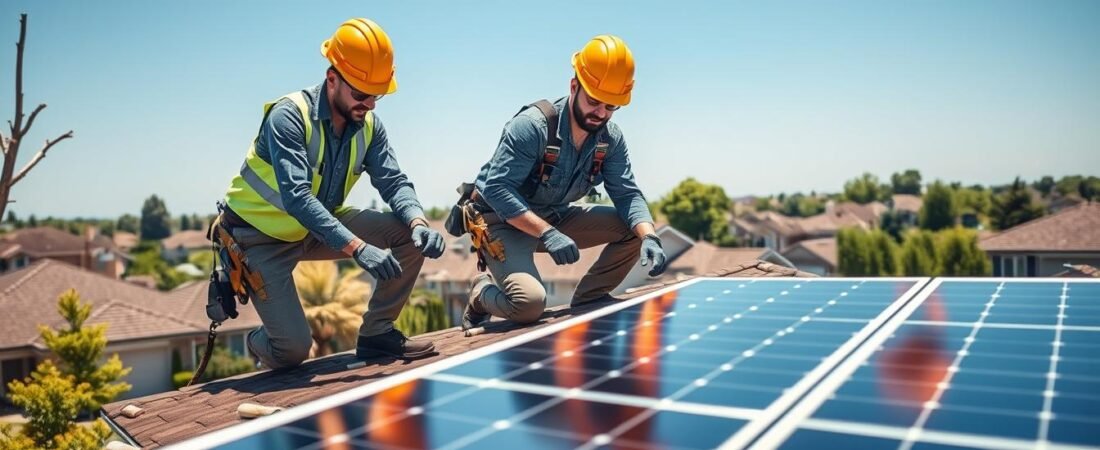
Take control of your home power with a clear, friendly path to lower bills and cleaner energy. Our team offers a streamlined solar panel installation process that respects your property and schedules.
Call us at 800-484-8766 to schedule free consultation. We start with a roof assessment to place the system for top efficiency.
We provide flexible financing so projects stay affordable. Get free quotes from our Vernon Hills office at 950 Corporate Woods Pkwy.
Why choose us? We deliver high-quality work, durable power systems, and a smooth transition to renewable energy for your home.
Why Choose Professional Solar Panel Installation Services
Choosing professional help makes the upgrade smoother and more reliable for your home.
Expertise and Quality
Our trained technicians follow strict safety and code standards. They use precise mounts and quality hardware to build a high-performance system. This reduces downtime and keeps your roof intact.
Customer-Centric Approach
We deliver a 5-star white glove experience with an individual plan for each home. That means designs that fit roof shape and household energy needs.
- Personalized design: tailored to your layout and usage.
- Skilled crew: certified teams that handle complex arrays with care.
- Long-term value: a durable setup that can boost home resale appeal.
| Feature | Benefit | Why it matters |
|---|---|---|
| White Glove Care | Full-site protection | Less disruption during work |
| Custom Layouts | Optimized output | Higher energy yields |
| Code Compliance | Permits & inspections | Safe, reliable operation |
Learn more about the benefits of hiring professional installers or explore our services to see how we tailor options for customers.
Understanding the Benefits of Renewable Energy
In 2026, switching to renewable energy still makes strong financial sense for many homeowners.
Modern systems deliver reliable power and cut monthly electricity costs for years. They also shrink your carbon footprint and support a cleaner grid.
Federal tax credits reduce upfront costs and improve payback timelines. That makes the move more affordable today than in the past.
- Generate clean electricity and lower utility bills.
- Use efficient panels that work well in varied weather.
- Enjoy long-term savings and increased home value.
| Benefit | What it means | Typical impact |
|---|---|---|
| Cost Savings | Lower monthly electricity | Payback in several years |
| Energy Independence | Less reliance on utilities | More predictable bills |
| Environmental Gain | Reduced emissions | Cleaner local air |
Our experts explain how these systems work so you can feel confident about going solar. We guide homeowners through incentives and long-term planning.
How Our Solar Panel Installation Service Works
We start with a clear, no-pressure consultation to assess your household energy needs. This free meeting helps us design the right system for your home.
Next, our team handles permits, grid interconnection paperwork, and all municipal filings. You stay informed while we take care of the complex steps.
- Schedule free: Call 800-484-8766 to set an appointment and learn about financing and timelines.
- Design & sign: We finalize plans and use digital document signing to speed approvals.
- Install & connect: Certified crews install the panels and integrate them safely with your electricity setup.
Our goal is a smooth process that reduces your dependence on the public grid. For more details and tailored options, visit our plans.
Assessing Your Roof for Solar Potential
We begin by evaluating your roof’s structure and lifespan so your energy upgrade lasts for decades.
Roof Integrity and Inspection
Before any installation, our team runs a rigorous roof inspection. We check framing, decking, and shingles to confirm the home can support the load.
We partner with Tron Restoration to review findings and recommend any repairs or reinforcements. This protects your investment and prevents leaks later.
During consultation, we map shading, orientation, and usable surface area. That analysis ensures the panels and the system will deliver peak output.
- Identify needed repairs before panel installation.
- Verify roof life expectancy and attachment points.
- Adapt methods for different roof types with trained crews.
Early verification of roof potential streamlines the solar panel installation and helps the system operate reliably for years.
Navigating Federal and State Incentives
Understanding local incentives is the fastest way to lower the net cost of an energy upgrade for your home.
Homeowners can reduce costs significantly by using the 30% federal tax credit and state programs like the IL SREC payment. These credits cut upfront expenses and shorten payback years.
We guide our customers through the complex process of applying for these benefits. That ensures you maximize savings and avoid missed deadlines.
- Review federal credit (30%) and state SREC options to lower total cost.
- Check your utility provider’s net metering policy to get fair credit for excess energy sent to the grid.
- Explore financing options that bridge initial installation costs and long-term returns.
Our team stays current on rules and local incentives so the chosen option remains cost-effective. With the right mix of credits and finance, going solar becomes an affordable path to energy independence.
The Role of Net Metering in Your Savings
When your system generates more electricity than you use, net metering lets you bank that value with your utility. Providers like ComEd and Ameren credit your account for excess kilowatt-hours sent to the grid.
How Credits Work
Net metering records the amount of power you export and converts it into credits. Those credits reduce the next bills when your home draws power from the grid.
The size of your solar system directly affects the credits you earn. A larger system usually produces more excess in sunny months and builds a buffer for cloudy periods.
Impact on Utility Bills
Properly sized systems help shift production to match your usage and maximize monthly savings. We design systems to optimize production and the value of your net metering agreement.
- Monitor output to see when credits grow and when you use stored value.
- Adjust usage patterns to make the most of exported electricity.
- Work with your utility’s rules so credits apply as favorably as possible.
“Net metering can turn your home into a productive asset that lowers long-term energy costs.”
Our experts guide you through how credits are applied and show practical steps to boost savings. That clear roadmap helps homeowners get measurable value from the grid relationship.
Battery Storage Solutions for Consistent Power
Adding high-capacity batteries gives your home reliable backup and smarter energy control.
We offer storage systems from Enphase, Tesla, Franklin, and QHome to keep essential circuits running during outages.
By pairing batteries with your existing setup, you capture excess daytime output and use it at night or during peak rates.
Our team sizes each battery to match your panels and household loads. That creates a true energy management system for the home.
- Backup power: Keeps refrigerators, medical devices, and lights on when the grid is down.
- Time-shift use: Store cheap daytime electricity for expensive evening demand.
- Grid resilience: Reduce reliance on the public grid and control your electricity costs.
| Brand | Typical Capacity | Key Benefit |
|---|---|---|
| Enphase | 3–10 kWh (modular) | Scalable microinverter integration |
| Tesla | 10–20 kWh (per unit) | High energy density and app monitoring |
| Franklin | 5–15 kWh | Robust backup and long cycles |
| QHome | 4–12 kWh | Cost-effective residential options |
We install to strict safety standards and configure systems so charging, discharge, and grid interaction are seamless.
Maintaining Your Solar System for Longevity
A short, regular care routine keeps your rooftop energy system working well for years.
Follow a cleaning cycle every 6–12 months with a soft-bristled brush and mild detergent. This prevents dust and grime from reducing output.
Cleaning and Care Tips
Simple checks go a long way. Wipe debris, clear bird droppings, and remove loose leaves so your panels still get sun.
- Schedule gentle washes every 6–12 months to protect surfaces and maintain peak production.
- Have a professional inspect mounts and electrical connections during routine visits to confirm the roof attachments are secure.
- Avoid harsh chemicals and abrasive tools; use soft brushes and mild soap to prevent scratches.
- Keep records after each visit so you can track performance and spot trends over months and years.
Proactive care helps your system deliver steady energy and protects the value of your panel installation. If any damage or loose wiring appears, contact a certified technician right away.
| Task | Frequency | Benefit |
|---|---|---|
| Gentle wash | 6–12 months | Maintains peak production |
| Mount & wiring check | Annual | Prevents leaks and electrical faults |
| Performance log review | Quarterly | Spot issues early and improve output |
What to Expect During the Installation Process
Expect a clear, step-by-step timeline when the team comes to place your system and link it to your home’s main breaker.
On installation day, our professional team will arrive to mount your solar panels and connect your solar system to the home electrical panel. We work efficiently to keep disruption to a minimum.
We encourage homeowners to ask any questions as our goal is to make customers feel informed and comfortable throughout the process.
- Call 800-484-8766 to schedule free site visits or to get free quotes and a full installation timeline.
- Our experts handle permits, inspections, and approvals so the system meets local codes and safety rules.
- We protect your roof and landscaping while crews work, and we follow careful cleanup procedures.
- At the end, the team gives a final walkthrough, answers remaining questions, and shows how to monitor solar power production.
Financing options are reviewed during consultation so you know next steps and expected timelines.
Addressing Common Concerns About Solar Performance
Questions about output on cloudy days and during winter are common and valid.
Many homeowners worry that panels stop producing in cold months. In fact, modern solar panels still generate electricity on overcast days and often perform better in cooler temperatures.
While panels do not make power at night, you can use net metering credits or battery storage to draw on daytime production after dark. These options let your household stretch daytime energy for evening use.
We help customers size the system to match actual energy needs. That ensures expected production covers typical home usage and seasonal swings.
Transparent answers about costs, financing, and long-term savings are part of every estimate. We explain how changing utility rates affect payback and which options fit your budget.
“Understanding how the system interacts with the grid builds confidence that renewable energy will deliver steady power for years.”
| Concern | Reality | Practical option |
|---|---|---|
| Winter output | Reduced but still productive | Proper sizing and high-efficiency panels |
| Nighttime use | No direct production | Net metering or battery backup |
| Long-term costs | Lower over years | Transparent financing and maintenance |
For routine upkeep tips see our panel maintenance guide.
Conclusion
Wrap up your upgrade with lasting value and a simple path to reliable power. Get started today, and enjoy lower monthly bills and stronger protection against rising utility costs.
Our team pairs expert workmanship with guidance on federal tax credits and net metering so you keep more of your investment. We design high-efficiency solar systems and size battery backup to match your household needs.
Ongoing support matters— from that first free consult to routine checks that keep everything running at peak performance. Contact us to begin a straightforward plan for a more efficient, cost-effective, and resilient home energy solution.